 Vibrantsnap

The Complete SaaS Marketing Strategy Playbook
You don't need a $50K/month marketing budget to grow a SaaS.
The most successful bootstrapped founders I've studied, from Balsamiq ($10.6M ARR) to Plausible Analytics ($3.1M ARR) to Tally ($3M ARR), all share one thing: they mastered capital-efficient marketing before they had capital.
This playbook breaks down exactly what works for bootstrapped SaaS marketing in 2025, based on real data from companies that built million-dollar businesses without investors.
Why Bootstrapped SaaS Marketing is Different
Let's be honest about the constraints.
What you don't have:
- Unlimited ad budgets
- A marketing team
- Brand recognition
- Time to wait 18 months for SEO to kick in
What you do have:
- Speed and flexibility
- Direct customer relationships
- Authenticity VC-backed competitors can't fake
- The ability to be profitable from day one
The goal isn't to copy Salesforce's marketing playbook. It's to find the highest-leverage channels that work specifically for capital-constrained founders.


The Bootstrapper's Marketing Framework
After analyzing 50+ successful bootstrapped SaaS companies, I've identified three phases every founder should follow:
Phase 1: Foundation (Months 1-3)
Goal: Get your first 100 paying customers
This phase is about validation, not scale. You're proving people will pay for your solution.
Key activities:
- Direct outreach in communities where your customers hang out
- Building in public to attract early believers
- Creating one killer piece of content that establishes expertise
- Setting up basic analytics to understand what's working
Metrics to track:
- Conversion from free to paid
- Customer acquisition cost (CAC)
- Time to first value
Phase 2: Traction (Months 4-12)
Goal: Reach $10K MRR
Now you've validated demand. Time to systematize what's working.
Key activities:
- Double down on your best-performing channel
- Launch product-led growth loops (free tools, templates)
- Build an email list through valuable content
- Start SEO groundwork for long-term traffic
Metrics to track:
- Monthly recurring revenue (MRR)
- Net revenue retention
- Organic traffic growth
Phase 3: Scale (Year 2+)
Goal: Hit $100K+ MRR
You have product-market fit. Now it's about efficient growth.
Key activities:
- Add paid acquisition with proven unit economics
- Expand content marketing with topic clusters
- Build referral and affiliate programs
- Consider strategic partnerships
Metrics to track:
- LTV:CAC ratio (aim for 3:1 or better)
- Payback period
- Revenue per employee
The 7 Highest-ROI Marketing Channels for Bootstrappers
Based on what's actually working for successful bootstrapped SaaS companies in 2025:
1. Product-Led Growth (PLG)
Why it works: Your product becomes your best marketing asset. Users experience value before paying.
Real example: Tally offers unlimited free forms with a "Made with Tally" badge. That badge drives 3% of all new signups. They reached $3M ARR with an 8-person team by being generous with their free tier.
How to implement:
- Create a genuinely useful free tier (not a crippled trial)
- Add subtle branding to free usage
- Build sharing/collaboration features that expose new users to your product
- Make the upgrade path obvious when users hit limits
Best for: Products with natural viral loops, tools that benefit from collaboration
2. Content Marketing + SEO
Why it works: Compounds over time. Once you rank, traffic is essentially free.
Real example: Plausible Analytics gets 31% of traffic from organic search. They built to $3.1M ARR with zero paid advertising, purely word-of-mouth and content.
How to implement:
- Target commercial intent keywords (people ready to buy)
- Create comparison pages ("Alternative to [Competitor]")
- Build topic clusters around your core use cases
- Focus on quality over quantity, one great post beats ten mediocre ones
Keyword opportunities for SaaS founders:
| Keyword Type | Example | Why It Works |
|---|---|---|
| Problem-aware | "how to track website analytics without cookies" | High intent, specific need |
| Comparison | "Plausible vs Google Analytics" | Bottom-of-funnel, ready to decide |
| Tutorial | "how to set up privacy-friendly analytics" | Builds trust, attracts ideal users |
Best for: B2B SaaS, technical products, anything with a learning curve
3. Building in Public
Why it works: Creates authentic connection, builds audience before you have a product, and generates content automatically.
Real example: Marc Lou built ShipFast to $50K MRR by sharing his entire journey on Twitter (97K+ followers). His transparency about revenue, challenges, and wins attracted other founders who became customers.
How to implement:
- Share revenue milestones (good and bad)
- Document your decision-making process
- Engage genuinely in founder communities
- Be honest about failures, they build more trust than wins
Platforms to prioritize:
- Twitter/X for tech and SaaS audiences
- LinkedIn for B2B
- Indie Hackers for founder community
- Reddit for niche communities
Best for: Solo founders, anyone with a unique story, products targeting other makers
4. Community-First Marketing
Why it works: Your customers become your marketing team when you invest in relationships.
Real example: Nomad List went from a free spreadsheet to $5.3M in annual revenue by building a paid community ($75/year). The community became the product.
How to implement:
- Start a Slack, Discord, or Circle community
- Provide genuine value before promoting anything
- Feature customers and their wins
- Create spaces for members to connect with each other
Best for: Products with engaged user bases, niche markets, subscription businesses
5. Strategic Partnerships + Integrations
Why it works: Leverage existing distribution instead of building from scratch.
Real example: Balsamiq's plugins for Confluence and JIRA gave them access to Atlassian's massive user base. This integration strategy contributed to their $10.6M ARR.
How to implement:
- Identify platforms your customers already use
- Build native integrations for major tools
- Get listed in partner marketplaces (Zapier, Slack App Directory, etc.)
- Create co-marketing opportunities with complementary products
Integration marketplaces to prioritize:
- Zapier (automation users)
- Slack App Directory (team tools)
- HubSpot Marketplace (marketing/sales tools)
- Shopify App Store (e-commerce)
- Notion (productivity)
Best for: Tools that enhance existing workflows, API products, B2B software
6. Product Hunt + Launch Events
Why it works: Concentrated attention creates momentum and social proof.
Real example: NotionForms hit #1 Product of the Day, which became a major growth driver on their path to $10K MRR. The launch badge still signals credibility years later.
How to implement:
- Prepare for 2-3 weeks before launch
- Build a hunter relationship (or launch yourself)
- Have your community ready to support on launch day
- Create a special offer for Product Hunt visitors
- Follow up with every comment and upvote
Launch timing tips:
- Tuesday, Wednesday, or Thursday launches perform best
- Avoid major holidays or competing with huge launches
- 12:01 AM PST is standard start time
- Relaunch every 6 months with major updates (like Unicorn Platform does)
Best for: New products, major feature releases, visual/demo-able tools
7. Video Marketing + Demo Content
Why it works: Shows your product in action, builds trust faster than text, and works 24/7.
Real example: At Vibrantsnap, our demo videos work around the clock, explaining our product to potential customers at 3 AM while I'm sleeping. Video converts better than any other medium because people see exactly what they're getting.
How to implement:
- Create a core product demo (60-90 seconds max)
- Build tutorial content for each major feature
- Use video in onboarding to reduce churn
- Repurpose demo content across social platforms
Video content that converts:
| Type | Length | Purpose |
|---|---|---|
| Hero demo | 60-90 sec | Landing page conversion |
| Feature tutorials | 2-3 min | Reduce support, increase adoption |
| Customer stories | 3-5 min | Social proof |
| Short clips | 15-30 sec | Social media, ads |
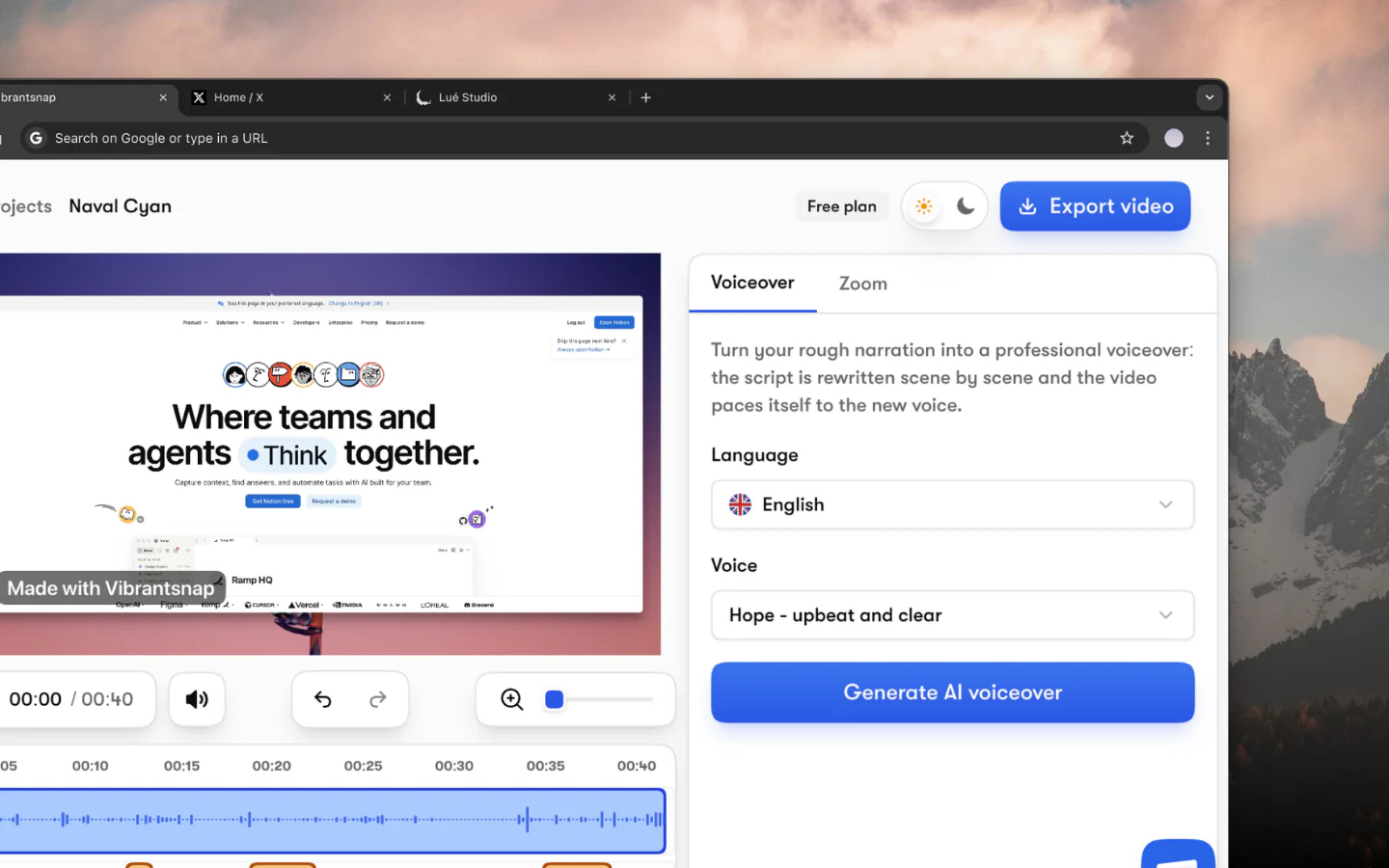
Vibrantsnap makes this easy, record your screen, and we auto-edit out the silences, add zoom effects, and give you analytics on viewer engagement.
Best for: Visual products, complex tools, anything that's easier to show than explain
The SaaS Marketing Stack for Bootstrappers
You don't need 47 tools. Here's the minimal effective stack:
Essential (Start with these)
| Category | Tool | Monthly Cost |
|---|---|---|
| Analytics | Plausible or Fathom | $9-14 |
| Buttondown or ConvertKit | Free-$29 | |
| CRM | Notion or free HubSpot | Free |
| Demo videos | Vibrantsnap | From $39/mo |
Growth Stage (Add when needed)
| Category | Tool | Monthly Cost |
|---|---|---|
| SEO | Ahrefs or Semrush | $99+ |
| Automation | Zapier | $19+ |
| Support | Intercom or Crisp | Free-$29 |
| Social scheduling | Buffer or Typefully | Free-$15 |
Total minimum stack cost: Under $100/month
Compare that to the $10K+/month marketing budgets VC-backed competitors burn through.
Channel Selection: Where Should YOU Focus?
Not every channel works for every product. Here's how to decide:
If your product is visual/demo-able:
Priority channels: Video marketing, Product Hunt, social media Why: People need to see it to understand it
If you're targeting developers:
Priority channels: SEO, documentation, open source, dev communities Why: Developers research extensively before buying
If you're in a niche market:
Priority channels: Community, partnerships, word-of-mouth Why: Small, tight-knit communities spread information fast
If you have a freemium model:
Priority channels: PLG, integrations, content marketing Why: Let the product do the selling
If you're targeting enterprise:
Priority channels: LinkedIn, case studies, outbound (selectively) Why: Enterprise buyers need social proof and relationship-building
Common Bootstrapper Marketing Mistakes
I've made all of these. Learn from my pain.
Mistake 1: Spreading too thin
The trap: Trying to be everywhere, Twitter, LinkedIn, TikTok, blog, podcast, YouTube...
The fix: Pick ONE primary channel. Master it. Only expand when it's working.
Mistake 2: Copying funded competitors
The trap: Running paid ads before you understand unit economics
The fix: Earn attention before you buy it. Paid acquisition is a multiplier, it multiplies zero if you don't have PMF.
Mistake 3: Building before marketing
The trap: Waiting until the product is "ready" to start marketing
The fix: Build your audience while you build your product. The feedback loop makes both better.
Mistake 4: Ignoring existing customers
The trap: Focusing all energy on acquisition, none on retention
The fix: Your best marketing is a product people love. Invest in customer success.
Mistake 5: Measuring vanity metrics
The trap: Celebrating follower counts and page views
The fix: Track revenue, conversion rates, and customer acquisition cost. Everything else is noise.
The 90-Day Bootstrapped Marketing Plan
Here's exactly what to do for the next 3 months:
Days 1-30: Foundation
- Set up basic analytics (Plausible or similar)
- Create your core product demo video
- Identify 3-5 communities where your customers hang out
- Start engaging genuinely (no pitching yet)
- Write your first high-value blog post
- Launch on Product Hunt (or schedule it)
Days 31-60: Traction
- Analyze what's working from month 1
- Double down on best-performing channel
- Build your email list with a lead magnet
- Create comparison content (vs. competitors)
- Set up a referral program
- Start building in public consistently
Days 61-90: Optimization
- Review customer acquisition cost by channel
- Cut channels that aren't performing
- Create customer success stories
- Explore partnership opportunities
- Build a content calendar for next quarter
- Set up basic automation for repetitive tasks
Measuring What Matters
The metrics that actually matter for bootstrapped SaaS:
Weekly tracking:
- New trial signups
- Trial-to-paid conversion rate
- Churn (customers lost)
- Support ticket volume
Monthly tracking:
- MRR growth rate
- CAC by channel
- Net revenue retention
- Organic traffic trends
Quarterly tracking:
- LTV:CAC ratio
- Revenue per employee
- Channel ROI
- Competitive positioning
Real Bootstrapped Marketing Timelines
Realistic expectations based on actual bootstrapped companies:
| Company | Time to $10K MRR | Primary Channel |
|---|---|---|
| Tally | 42 months | Product-led growth |
| NotionForms | 12 months | Community + Product Hunt |
| Plausible | 23 months | SEO + word-of-mouth |
| SiteGPT | 1 month | Twitter + perfect timing |
| Gymdesk | 48 months | SEO + content |
Notice the range. Some hit it fast with perfect timing. Most take 2-4 years of consistent work. Both paths are valid.
Conclusion: The Bootstrapper's Advantage
Here's what VC-backed competitors don't want you to know: their funding is a liability, not just an asset.
They have to grow at all costs. You can grow sustainably.
They have to satisfy investors. You only have to satisfy customers.
They burn money on every channel. You perfect the ones that work.
The most successful bootstrapped SaaS companies didn't outspend their competitors. They outthought them.
Your advantages:
- Speed to make decisions
- Authenticity customers trust
- Focus that comes from constraints
- Profitability from day one
Start with one channel. Master it. Then expand.
The playbook isn't complicated. The execution takes years.
Ready to create demo videos that convert?
Try Vibrantsnap free, Record, auto-edit, and track your product demos without the complexity. Built by a bootstrapped founder, for bootstrapped founders.
This article is based on analysis of 50+ bootstrapped SaaS companies and real revenue data from public sources including Indie Hackers, GetLatka, and founder interviews.