 Vibrantsnap

17 B2B SaaS Marketing Tactics ($500 Budget)
Your competitor just raised $50M. They're buying every keyword, sponsoring every podcast, and flooding LinkedIn with "thought leadership."
You have $500/month for marketing.
Good news: you can still win.
The highest-ROI marketing tactics don't require big budgets, they require creativity, consistency, and understanding what actually works for B2B SaaS in 2025.
This guide covers 17 tactics that bootstrapped founders use to compete with funded players. Each one is proven by real companies with real revenue.
Part 1: Content & SEO Tactics
Tactic 1: The Comparison Page Strategy
What it is: Create pages comparing your product to competitors. Target "Alternative to [Competitor]" and "[Your product] vs [Competitor]" keywords.
Why it works: People searching these terms are at the bottom of the funnel, ready to buy. They just need help deciding.
Real example: Plausible Analytics has dedicated pages for "Plausible vs Google Analytics," "Plausible vs Fathom," and "Plausible vs Matomo." These pages rank for commercial intent keywords and convert at high rates.
Implementation (cost: $0):
- List your top 5 competitors
- Create honest comparison pages (highlight where they're better too, it builds trust)
- Include a clear CTA for your product
- Update quarterly as competitors change
Keywords to target:
- [Your product] vs [Competitor]
- [Competitor] alternative
- [Competitor] pricing 2025
- Best [Competitor] alternatives
Tactic 2: The "Best [Category] Tools" Article
What it is: Create comprehensive listicles featuring your product alongside competitors.
Why it works: These articles rank for high-volume commercial keywords. You control the narrative.
Real example: Write "Best Analytics Tools for SaaS" and include your product naturally. If you're genuinely good, featuring competitors builds credibility.
Implementation (cost: $0):
- Research "[your category] tools" keyword volume
- Include 10-15 tools (you can be #3, not necessarily #1)
- Be genuinely helpful, include tools better than yours in certain areas
- Update annually to maintain rankings
Pro tip: Link to this article from your homepage as "See how we compare."
Tactic 3: The Problem-Focused Content Strategy
What it is: Write articles about the problems you solve, not the features you have.
Why it works: Your customers search for problems, not solutions. "How to reduce website load time" gets more searches than "best performance monitoring tool."
Real example: ScreenshotOne ranks #1 for "screenshot API" by writing extensively about use cases, tutorials, and implementation guides, not just feature lists.
Implementation (cost: $0):
- List 10 problems your product solves
- Research search volume for each problem
- Write comprehensive guides (2,000+ words) for top 5
- Include your product as one solution (not the only solution)
Content templates:
- "How to [solve problem] in 2025"
- "Why [problem] is costing you [money/time]"
- "[Number] ways to fix [problem]"
- "The complete guide to [problem area]"
Tactic 4: The SEO Topic Cluster
What it is: Create a pillar page (comprehensive guide) surrounded by related content that links back to it.
Why it works: Google rewards topical authority. Clusters signal expertise.
Real example: Structure for a project management SaaS:
Pillar: "The Complete Guide to Project Management for Remote Teams"
├── "How to Run Effective Remote Standups"
├── "Best Practices for Async Communication"
├── "Remote Team Onboarding Checklist"
├── "Time Zone Management for Global Teams"
└── "Remote Work Productivity Tips"
Implementation (cost: $0):
- Choose your core topic
- Identify 8-10 subtopics
- Create pillar page first
- Write supporting articles (1 per week)
- Interlink everything


Part 2: Product-Led Tactics
Tactic 5: The Generous Free Tier
What it is: Offer genuinely useful free functionality, not a crippled trial.
Why it works: Free users become distribution. If your product is good, they'll talk about it.
Real example: Tally offers unlimited free forms and submissions. The "Made with Tally" badge on free forms drives 3% of new signups. They reached $3M ARR with this approach.
Implementation (cost: $0):
- Determine what you can give away without destroying unit economics
- Add subtle branding to free usage
- Make upgrade path clear but not annoying
- Track free-to-paid conversion rate
Free tier principles:
- Useful enough that free users recommend you
- Limited enough that power users want to upgrade
- Branded enough that free usage creates distribution
Tactic 6: The Viral Loop Feature
What it is: Build features that naturally expose new users to your product.
Why it works: Each user becomes a marketing channel.
Examples:
| Product | Viral Loop |
|---|---|
| Tally | "Made with Tally" badge |
| Calendly | Calendar links expose brand |
| Loom | Video links show Loom player |
| Notion | Shared pages show Notion |
| Vibrantsnap | Shared demos include branding |
Implementation (cost: $0):
- Identify where your product is shared or seen by others
- Add tasteful branding to shared content
- Make removing branding a paid feature
- Track signups from viral sources
Tactic 7: The Free Tool Strategy
What it is: Build free standalone tools that attract your target audience.
Why it works: Free tools rank well, attract backlinks, and expose potential customers to your brand.
Real example: Unicorn Platform creates free tools (color generators, favicon makers) that rank for developer searches. These drive traffic to the main product.
Implementation (cost: dev time only):
- Identify simple tools your audience needs
- Build as standalone pages on your domain
- Include clear CTA to main product
- Submit to Product Hunt for launch boost
Free tool ideas by niche:
- SaaS: ROI calculators, pricing comparison tools
- Marketing: Headline analyzers, social image generators
- Developer: Code formatters, JSON validators
- Design: Color palette generators, contrast checkers
Part 3: Community & Relationship Tactics
Tactic 8: The Reddit Strategy
What it is: Provide genuine value in relevant subreddits before ever mentioning your product.
Why it works: Reddit users hate promotion but love helpful people. Build reputation first, convert later.
Real example: Many bootstrapped founders credit Reddit for early traction. FeedbackPanda's Arvid Kahl spent weeks in teacher Facebook groups understanding problems before building.
Implementation (cost: $0):
- Find 3-5 subreddits where your customers hang out
- Spend 2-4 weeks answering questions (no promotion)
- Build karma and reputation
- Only mention your product when genuinely relevant
- Never post promotional content directly
Subreddits for B2B SaaS:
- r/SaaS
- r/startups
- r/Entrepreneur
- r/smallbusiness
- [Industry-specific subreddits]
Tactic 9: Building in Public
What it is: Share your startup journey openly, revenue, challenges, decisions, failures.
Why it works: Authenticity builds trust. Your audience roots for you. The journey itself becomes content.
Real examples:
- Marc Lou: 97K Twitter followers, shares every product launch and revenue number
- Pieter Levels: Public revenue dashboard for all products
- Kyle Nolan (ProjectionLab): Blogged entire journey to $1M ARR
Implementation (cost: $0):
- Pick one platform (Twitter/X for most B2B SaaS)
- Share weekly updates: metrics, learnings, challenges
- Be honest about failures (they build more trust than wins)
- Engage with others building in public
- Consistent cadence matters more than perfection
What to share:
- Monthly revenue milestones
- Feature launches and user feedback
- Mistakes and what you learned
- Behind-the-scenes decisions
- Customer wins (with permission)
Tactic 10: The Expert Interview Strategy
What it is: Interview experts, customers, or thought leaders. Publish as content.
Why it works: Interviewees share with their audiences. You get quality content. Everyone wins.
Implementation (cost: $0):
- Identify 10 experts your audience respects
- Reach out with specific, flattering asks
- Conduct interview (video, audio, or written)
- Publish and promote
- Send to interviewee to share
Pro tip: Ask interviewees to share quotes on social. Provide pre-written posts to make it easy.
Part 4: Outbound & Sales Tactics
Tactic 11: The Personal Video Outreach
What it is: Send personalized video messages to potential customers instead of cold emails.
Why it works: Videos stand out. They show effort. Response rates are 3-5x higher than text emails.
Implementation (cost: $0-$20/mo):
- Use Vibrantsnap or Loom to record personal videos
- Mention something specific about their business
- Keep under 60 seconds
- Include clear next step (book a call, try free tier)
- Track who watches and follow up
Video outreach template:
"Hey [Name], I noticed [specific thing about their business].

[30-second demo of how your product helps with that specific thing]

Would love to show you more, here's a link to book 15 minutes."
Results: Founders report 30-50% response rates vs. 3-5% for cold email.
Tactic 12: The Partner Ecosystem Play
What it is: Build integrations with platforms your customers already use. Get listed in their marketplaces.
Why it works: You leverage their distribution instead of building your own.
Real example: Balsamiq's plugins for Confluence and JIRA gave them access to Atlassian's massive user base. It became a significant revenue driver.
Implementation (cost: dev time only):
- List platforms your customers use
- Build native integrations for top 3
- Get listed in partner marketplaces
- Create co-marketing content
- Apply for partner programs
High-value marketplaces:
- Zapier (automation users)
- HubSpot Marketplace (marketing/sales)
- Slack App Directory (team tools)
- Shopify App Store (e-commerce)
- Notion (productivity)
- Atlassian Marketplace (enterprise)
Tactic 13: The Affiliate Program
What it is: Pay customers and partners a commission for referrals.
Why it works: Aligns incentives. Your customers become your sales team.
Real example: Submagic offers 30% lifetime commissions, the most generous in SaaS. Over 10,000 affiliates drive $1.6M in annual revenue. It's a core growth driver for their $8M ARR business.
Implementation (cost: % of sales):
- Use affiliate software (FirstPromoter, Rewardful, PartnerStack)
- Set competitive commission (20-30% recurring is standard for SaaS)
- Recruit happy customers first
- Provide marketing materials
- Pay promptly and communicate regularly
Affiliate commission benchmarks:
| Model | Typical Commission |
|---|---|
| One-time payment | 30-50% |
| Recurring SaaS | 20-30% recurring |
| Lifetime deal | 20-40% one-time |
Part 5: Launch & PR Tactics
Tactic 14: The Product Hunt Strategy
What it is: Launch on Product Hunt to get concentrated attention and social proof.
Why it works: Product Hunt visitors are early adopters willing to try new tools. The "Product of the Day" badge is lasting credibility.
Real examples:
- NotionForms: #1 Product of Day → major growth driver
- HabitKit: #1 Product of Day → $15K MRR
- Vibrantsnap: #1 Product of Day → credibility boost
Implementation (cost: $0):
Pre-launch (2-3 weeks before):
- Build a Hunter relationship (or launch yourself)
- Prepare assets: logo, screenshots, GIF, description
- Warm up your network
- Create a special offer for PH visitors
Launch day:
- Launch at 12:01 AM PST
- Respond to every comment within hours
- Ask supporters to upvote (don't be spammy)
- Share on Twitter, LinkedIn, email list
Post-launch:
- Email everyone who upvoted
- Add badge to website
- Plan relaunch with major updates (6 months later)
Pro tip: Tuesday, Wednesday, Thursday launches perform best. Avoid Mondays (competition) and weekends (low traffic).
Tactic 15: The Relaunch Strategy
What it is: Relaunch your product on Product Hunt every 6 months with significant updates.
Why it works: You can launch multiple times if there are meaningful changes. Each launch reaches new audiences.
Real example: Unicorn Platform relaunches every 6 months with updates. Each launch brings a new wave of users.
Implementation (cost: $0):
- Batch major features for 6-month releases
- Create fresh assets and messaging
- Announce as "[Product] 2.0" or "Major Update"
- Treat each launch as seriously as the first
Tactic 16: The Hacker News Play
What it is: Get featured on Hacker News for massive developer/tech audience exposure.
Why it works: One front-page post can drive thousands of visitors and significant trial signups.
Real example: ProjectionLab credits a viral Hacker News post as a pivotal growth moment.
Implementation (cost: $0):
What works on HN:
- Show HN: Launch posts for new products
- Technical deep-dives on how you built something
- Honest startup stories with numbers
- Open source announcements
What doesn't work:
- Promotional content
- Clickbait titles
- "Please upvote" asks
Timing: Post between 9 AM - 12 PM ET for best visibility.
Tactic 17: The Demo Video Strategy
What it is: Create compelling product demo videos that work 24/7 on your landing page and across marketing channels.
Why it works: Video converts better than text. Visitors understand your product faster. Good demos reduce sales friction.
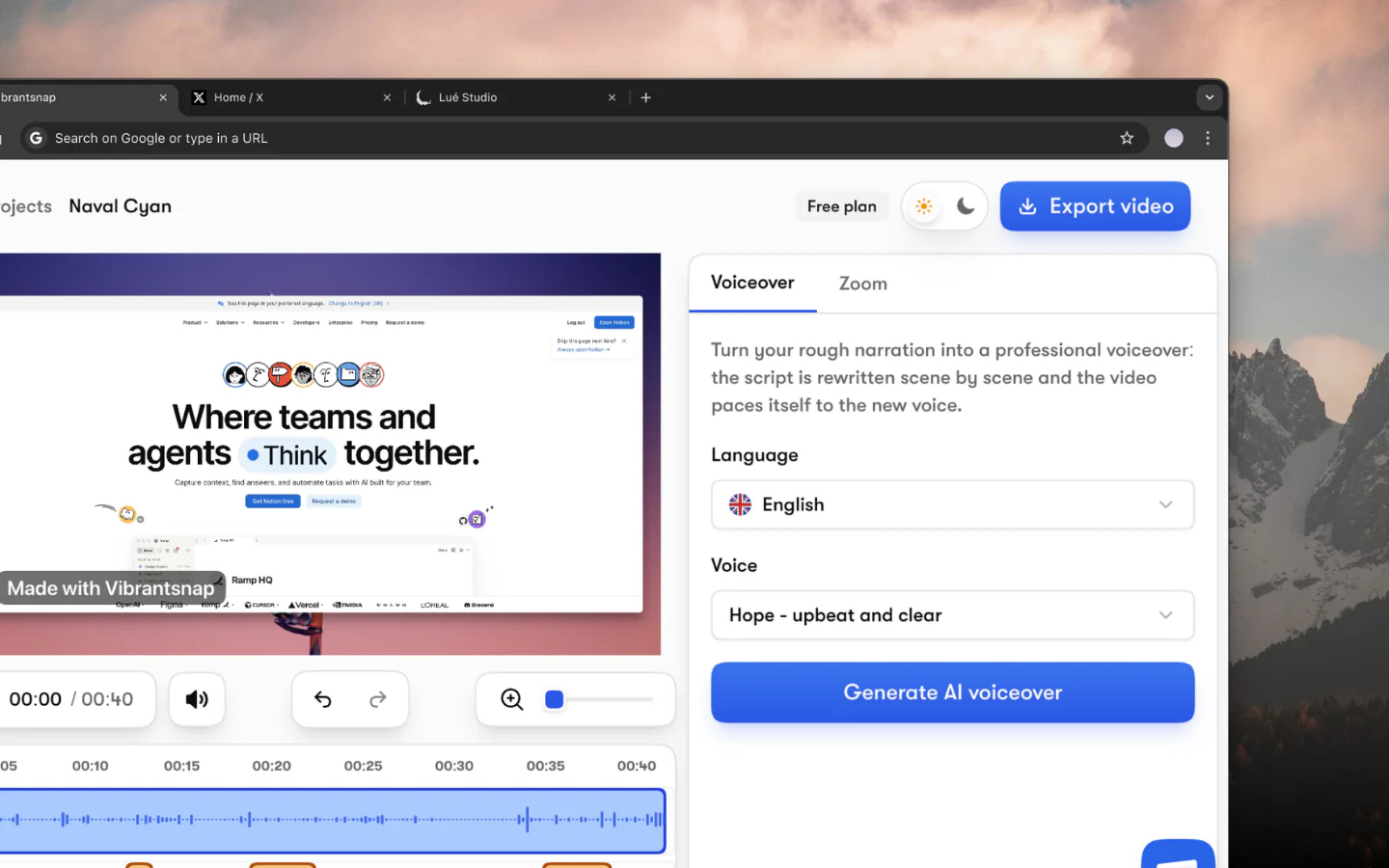
Real example: At Vibrantsnap, our demo videos work around the clock, explaining the product to potential customers at 3 AM while I'm sleeping. We've seen a measurable increase in trial signups after optimizing our demo video.
Implementation (cost: $0-$20/mo):
- Script your demo (60-90 seconds max)
- Record multiple takes
- Use auto-editing tools like Vibrantsnap to remove silences and add polish
- Place prominently on landing page
- Repurpose for social, emails, sales outreach
Demo video checklist:
- Under 90 seconds
- Shows core value in first 30 seconds
- Clear, crisp audio
- Ends with specific CTA
- No long intros or logo animations
The Low-Budget Marketing Playbook
Here's how to combine these tactics at different stages:
$0-$100/month Budget
Focus: Organic content and product-led growth
| Tactic | Time Investment | Expected Impact |
|---|---|---|
| Comparison pages | 4 hours/page | High |
| Building in public | 1 hour/day | Medium |
| Reddit engagement | 30 min/day | Medium |
| Free tier with viral loop | Dev time | High |
| Product Hunt launch | 20 hours total | High (one-time) |
$100-$500/month Budget
Add: Tools and partnerships
| Tactic | Cost | Expected Impact |
|---|---|---|
| SEO tool (Mangools) | $29/mo | Medium |
| Demo videos (Vibrantsnap) | From $39/mo | High |
| Affiliate software | $50/mo | Medium-High |
| Email tool (ConvertKit) | $29/mo | Medium |
$500-$1,000/month Budget
Add: Paid amplification
| Tactic | Cost | Expected Impact |
|---|---|---|
| SEO tool (Ahrefs Lite) | $99/mo | High |
| Retargeting ads | $200/mo | Medium |
| Sponsored newsletter | $200-$500 | Variable |
| Freelance content | $200/mo | Medium |
Measuring What Works
Track these metrics weekly to know what's working:
| Metric | What It Tells You |
|---|---|
| Traffic by source | Which channels drive visitors |
| Demo video watch rate | If your message resonates |
| Trial signups by source | Which channels drive intent |
| Trial-to-paid conversion | If your product delivers value |
| CAC by channel | Which channels are profitable |
| Content rankings | If SEO is working |
The 80/20 rule applies: 20% of your tactics will drive 80% of results. Find them and double down.
What NOT to Do
Tactics that waste time and money for bootstrapped founders:
Paid ads before PMF: You're burning money on traffic that won't convert. Prove you can convert organic traffic first.
Enterprise ABM campaigns: Account-based marketing requires significant budget and sales team. Focus on self-serve first.
PR agencies: $5K+/month for uncertain results. Your time is better spent on owned channels.
Influencer sponsorships: Expensive and hard to measure. Build relationships instead.
Broad content strategy: "We'll write about everything in our space." Focus on content tied to buying intent.
The Bottom Line
You don't need $50K/month to grow a B2B SaaS.
The most successful bootstrapped companies use tactics that require time and creativity, not budget:
- Content that ranks and converts (comparison pages, problem-focused content)
- Products that market themselves (generous free tiers, viral loops)
- Relationships that compound (building in public, community engagement)
- Launches that create momentum (Product Hunt, Hacker News)
Start with one tactic. Master it. Then add another.
The companies that beat funded competitors don't outspend them, they outthink them.
Once you've picked the tactics that fit your stage, see the 40+ B2B marketing tools for SaaS founders for the actual stack we use to execute them — every tool listed costs under $100/month, with honest pricing and zero "contact sales" picks.
Need demo videos that convert?
Try Vibrantsnap free , Record your screen, and we automatically remove silences, add zoom effects, and give you analytics on viewer engagement. I built it because I was tired of spending hours editing product demos.