Vibrantsnap
OBS Screen Recording: Step-by-Step Setup (Audio in 2 Min)
OBS Studio is the most widely used free obs screen recorder for live streaming and screen capture on the planet. Hundreds of thousands of creators use it daily for gaming broadcasts, tutorial videos, product demos, and more. With the screen recording software market valued at $1.5 billion in 2024 and growing at a 9.2% CAGR (OpenPR), there is no shortage of options. But OBS remains the go-to choice for anyone who wants full control over their recording setup without paying a cent.
This guide walks you through everything: installation, optimal settings for different use cases, scene and audio configuration, output formats, and advanced features you might not know about.
Quick answer: To screen record with OBS: 1. In the Sources panel, click + and add Display Capture (full screen) or Window Capture (one app). 2. In Settings → Output, set the recording format to MP4 or Hybrid MP4. 3. Check that Desktop Audio and Mic/Aux show activity in the Audio Mixer. 4. Click Start Recording. Your file saves to the Videos folder by default — the sections below cover the settings that make it look professional.
What Is OBS Studio and Why Use It?
OBS (Open Broadcaster Software) is a free, open-source application for screencasting and live streaming. It runs on Windows, macOS, Linux, and FreeBSD. Version 21.1.2 alone pulled nine million downloads in just three months (OBS Project Blog), and the project has only grown since.
Here is what makes OBS stand out:
- 100% free. No watermarks, no trial limits, no hidden fees.
- Cross-platform. Works on Windows 10/11, macOS (Intel and Apple Silicon), and major Linux distributions.
- Highly customizable. Scenes, sources, filters, plugins, and hotkeys give you precise control.
- Active development. OBS Studio 32.0, released September 2025, introduced a Plugin Manager, optional crash-log uploads, improved NVIDIA RTX audio effects, and an experimental Metal renderer for Apple Silicon Macs.
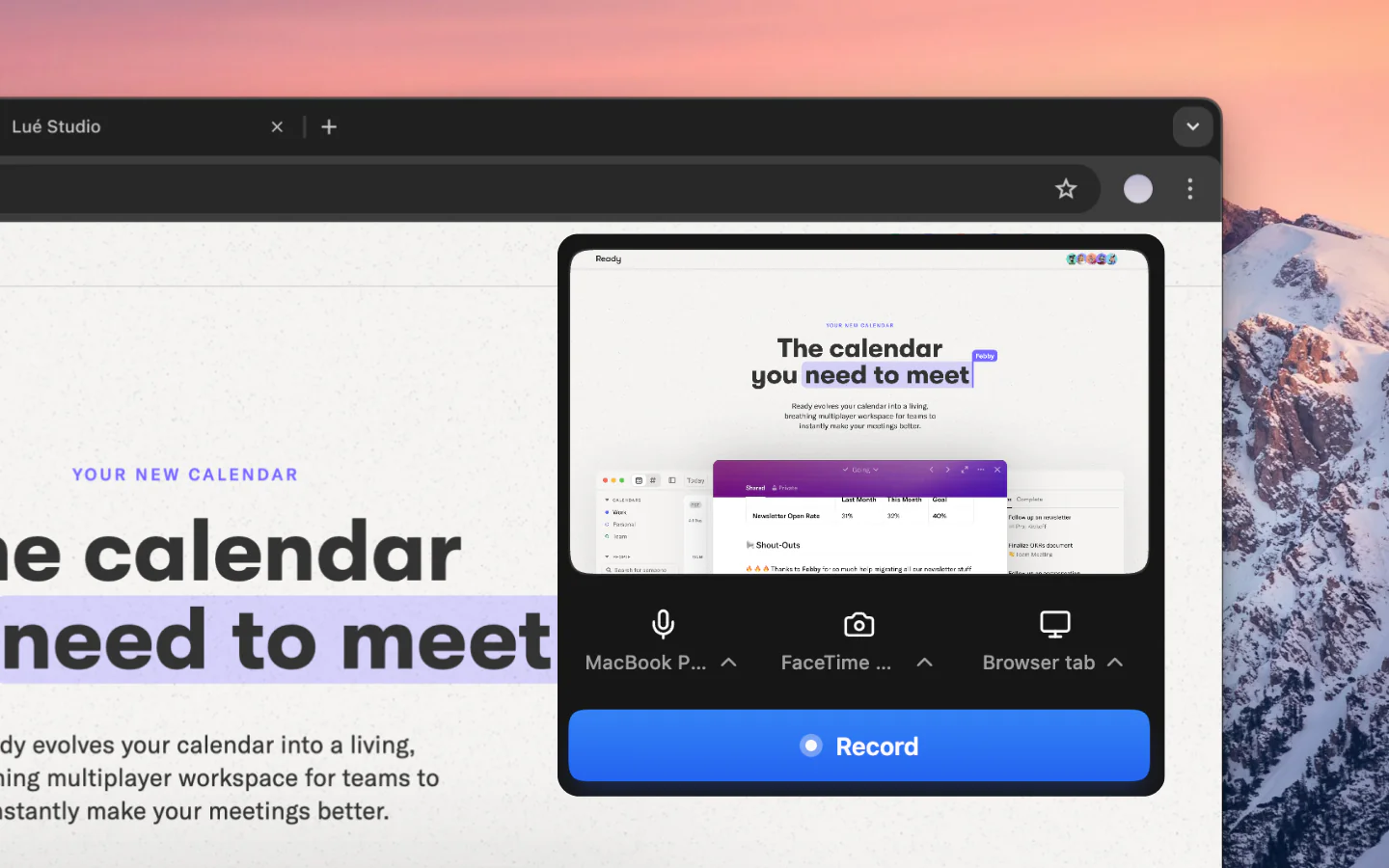
The tradeoff? OBS has a steep learning curve. If you only need quick screen recordings for product demos or team updates, a tool like Vibrantsnap can save you hours of configuration. It records in 4K at 120fps with AI-powered auto-editing and one-click polishing. But if you want granular control, especially for gaming or live streaming, OBS is hard to beat.


Step 1: Download and Install OBS Studio
Windows
- Go to obsproject.com and click the Windows button.
- Run the installer. Accept the license agreement.
- Choose your install directory (the default is fine for most users).
- Click Install, then Finish.
macOS
- Download the macOS installer from obsproject.com.
- Open the
.dmgfile and drag OBS Studio into your Applications folder. - On first launch, grant screen recording and microphone permissions in System Settings > Privacy & Security.
Linux
On Ubuntu/Debian-based distributions, run:
sudo apt install obs-studio
For Flatpak:
flatpak install flathub com.obsproject.Studio
Step 2: Run the Auto-Configuration Wizard
When you open OBS for the first time, the Auto-Configuration Wizard appears. This is worth using.
- Select Optimize just for recording (unless you also plan to stream).
- Set your base resolution to match your monitor (typically 1920x1080).
- Choose 60 FPS for smooth motion, or 30 FPS if your hardware struggles.
- Let OBS run its benchmark test. It will pick the best encoder and settings for your system.
You can always re-run this wizard from Tools > Auto-Configuration Wizard.
Step 3: Configure OBS Screen Recorder Settings for Your Use Case
Settings vary depending on what you are recording. Here are three optimized profiles.
Gaming Recordings
Gamers need high frame rates and minimal performance impact.
| Setting | Value |
|---|---|
| Output Mode | Advanced |
| Encoder | NVIDIA NVENC H.264 (preferred) or x264 |
| Rate Control | CRF |
| CRF Value | 16-18 (lower = better quality, larger files) |
| Resolution | 1920x1080 or 2560x1440 |
| FPS | 60 |
| Recording Format | MKV (remux to MP4 after) |
Why MKV? If OBS crashes or your PC freezes mid-recording, MKV files remain intact. MP4 files corrupt when not properly closed. You can remux MKV to MP4 afterwards via File > Remux Recordings.
For NVIDIA GPU owners, NVENC offloads encoding to the GPU, freeing your CPU for the game itself. AMD users should select AMD HW H.264 (AMF). If you only have a CPU, use x264 with the veryfast preset to minimize performance loss.
Tutorial and How-To Videos
Tutorials prioritize clarity over frame rate. Text and UI elements need to be sharp.
| Setting | Value |
|---|---|
| Encoder | x264 or NVENC |
| Rate Control | CRF |
| CRF Value | 18-20 |
| Resolution | 1920x1080 |
| FPS | 30 |
| Recording Format | MKV |
| Downscale Filter | Lanczos (best for text clarity) |
At 30 FPS, file sizes stay manageable and your CPU has more breathing room. The Lanczos downscale filter preserves text sharpness if you are recording at a higher resolution and scaling down.
Product Demos and Presentations
For SaaS demos, software walkthroughs, or slide-based content, keep things simple.
| Setting | Value |
|---|---|
| Encoder | x264 |
| Rate Control | CRF |
| CRF Value | 20-22 |
| Resolution | 1920x1080 |
| FPS | 30 |
| Recording Format | MP4 |
Since demos rarely involve fast motion, a CRF of 20-22 produces clean results at smaller file sizes. MP4 works fine here because the risk of a mid-recording crash is lower than during a multi-hour gaming session.
Step 4: Set Up Scenes and Sources
Scenes and sources are the backbone of OBS. A scene is a layout. A source is a visual or audio element within that layout.
Creating Your First Scene
- In the Scenes panel (bottom-left), click the + button.
- Name it something descriptive: "Full Screen Recording," "Webcam + Screen," or "Gaming Overlay."
Adding Sources
Click + in the Sources panel and choose from:
- Display Capture: Records your entire monitor. Best for tutorials and demos.
- Window Capture: Records a single application window. Useful when you want to hide desktop clutter.
- Game Capture: Hooks directly into a game's rendering pipeline. Lowest overhead for gaming.
- Video Capture Device: Adds your webcam feed.
- Audio Input Capture: Adds your microphone.
- Audio Output Capture: Captures system audio (game sounds, music, notifications).
- Image/Media Source: Adds logos, overlays, or pre-recorded video clips.
Arranging Sources
Sources stack like layers. The source at the top of the list appears in front. Drag sources to reorder them, and resize or reposition them directly on the preview canvas.
Pro tip: Create multiple scenes for different segments. For example, a "Starting Soon" scene, a "Main Content" scene, and an "Outro" scene. Switch between them during recording using hotkeys or the scene list.
Step 5: Audio Configuration
Bad audio kills a recording faster than bad video. Here is how to get it right.
Setting Up Audio Devices
Go to Settings > Audio:
- Set Sample Rate to 48 kHz.
- Under Global Audio Devices, assign your microphone to Mic/Auxiliary Audio.
- Assign your speakers or headphones to Desktop Audio.
Audio Mixer Adjustments
The Audio Mixer at the bottom of OBS shows real-time volume levels.
- Desktop Audio should peak around -10 dB to -6 dB.
- Mic/Auxiliary should peak around -12 dB to -6 dB.
- Click the gear icon next to your mic and select Filters to add noise suppression or gain.
Recommended Audio Filters
Add these filters to your microphone source (in this order):
- Noise Suppression: Use "RNNoise" for AI-based noise removal, or "Speex" for a lighter option.
- Noise Gate: Set the close threshold to -32 dB and the open threshold to -26 dB. This silences background noise when you stop talking.
- Compressor: Set the ratio to 3:1 with a threshold of -18 dB. This evens out volume differences so loud moments do not clip and quiet moments remain audible.
Separate Audio Tracks
For post-production flexibility, record microphone and desktop audio on separate tracks:
- Go to Settings > Output > Recording (Advanced mode).
- Set Audio Track to 1.
- In the Audio Mixer, click the gear icon for your mic, go to Advanced Audio Properties, and assign it to Track 2.
- Assign Desktop Audio to Track 1.
This lets you adjust voice and game audio independently in your editing software.
Step 6: Output Formats and File Management
Choosing a Container Format
| Format | Pros | Cons |
|---|---|---|
| MKV | Crash-resistant, multi-track audio | Requires remux for some editors |
| MP4 | Universal compatibility | Corrupts if recording stops unexpectedly |
| FLV | Crash-resistant | Limited to H.264, no multi-track audio |
Recommendation: Record in MKV, then remux to MP4 via File > Remux Recordings. This gives you the best of both worlds.
Setting the Recording Path
Go to Settings > Output and set your Recording Path to a folder on your fastest drive (ideally an SSD). Avoid recording to the same drive your OS or game is installed on if possible.
Step 7: Advanced Features Worth Knowing
Studio Mode
Enable Studio Mode via the button in the bottom-right corner. This gives you a dual-preview layout: the left panel shows your next scene, and the right panel shows what is currently live. You can set up transitions between scenes before switching.
Hotkeys
Go to Settings > Hotkeys to assign keyboard shortcuts for:
- Start/Stop Recording
- Switch Scenes
- Mute/Unmute Mic
- Push-to-Talk
Well-configured hotkeys speed up your workflow significantly, especially during live recordings where you cannot afford to click around the OBS interface.
Plugins
OBS Studio 32.0 introduced a built-in Plugin Manager, making plugin installation much easier. Some essential plugins:
- StreamFX: Advanced source mirroring, blur, and 3D transform effects.
- obs-websocket (now built-in): Remote control OBS from a phone or another computer.
- Advanced Scene Switcher: Automates scene switching based on conditions (active window, time, audio levels).
Virtual Camera
OBS can output your scene as a virtual webcam. Click Start Virtual Camera to use your OBS scene in Zoom, Google Meet, Teams, or any other app that accepts a webcam input. This is useful for branded presentations or green screen setups.
Troubleshooting Common OBS Recording Issues
Black screen on Display Capture (Windows) Right-click the OBS shortcut, select Run with graphics processor > Integrated graphics. Or go to Windows Settings > System > Display > Graphics, find OBS, and set it to Power saving.
Dropped frames or lag Lower your output resolution, reduce FPS to 30, or switch from x264 to NVENC. Close unnecessary background applications.
Audio out of sync Go to Settings > Audio and check the sample rate matches across all devices. You can also add a Sync Offset in Advanced Audio Properties to manually correct drift.
Large file sizes Increase the CRF value (e.g., from 18 to 22) for smaller files at slightly lower quality. Or reduce your resolution from 1440p to 1080p. You can also run your recordings through our free video compressor to reduce size after recording.
When OBS Might Be More Than You Need
OBS is powerful, but that power comes with complexity. If you are a founder, marketer, or product manager who needs to record a quick demo or walkthrough, spending an hour tweaking encoder settings and audio filters might not be the best use of your time.
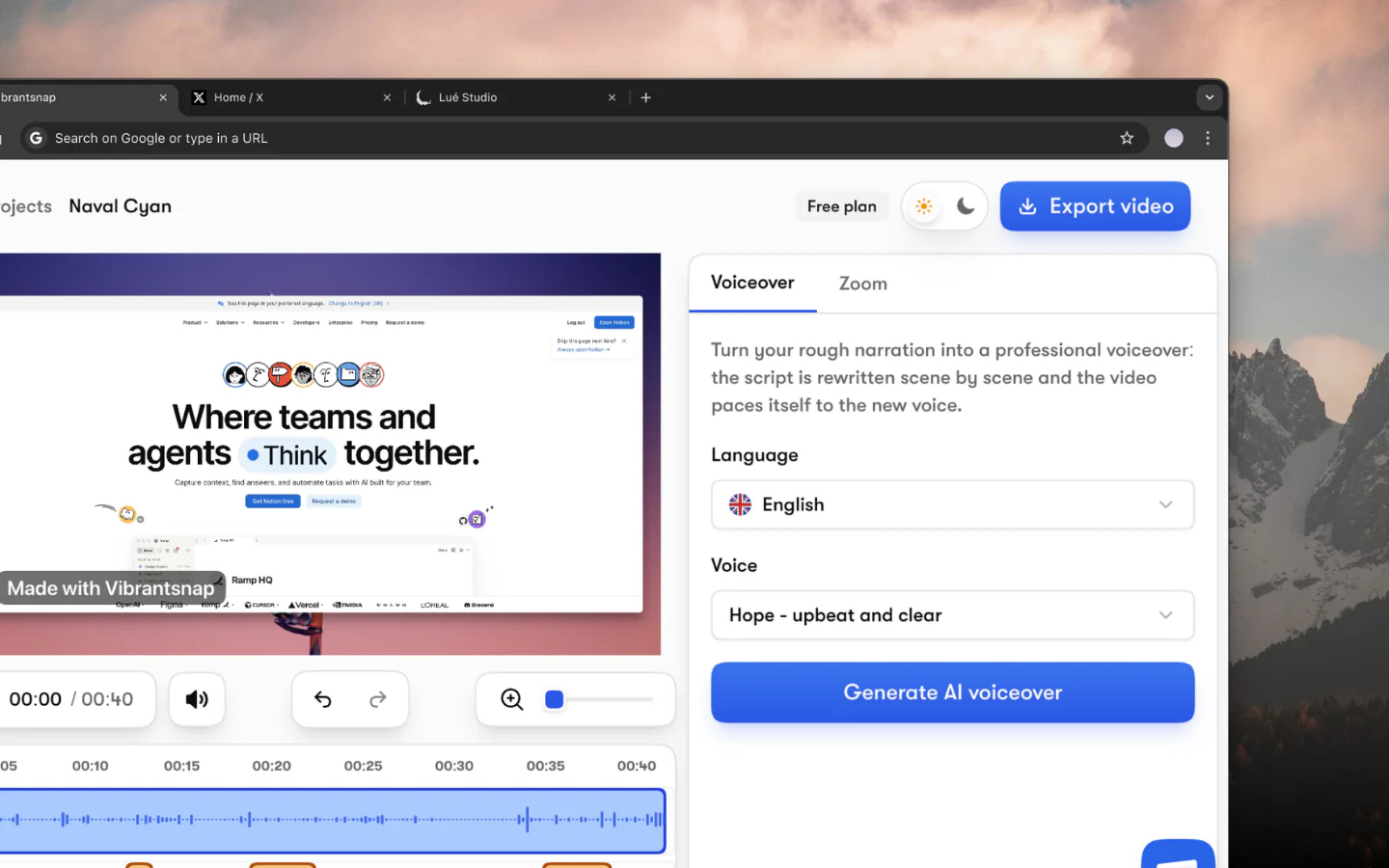
Vibrantsnap is built for exactly this scenario. It handles 4K recording at 120fps, applies AI-powered auto-editing, and lets you embed CTAs directly in your videos. Over 1,827 founders already use it, and it carries a 4.8/5 rating. Free to record and edit — subscribe at export from $39/month. For non-gaming screen recordings where speed matters more than granular control, it is worth a look.
Related: Prefer Windows' built-in tools? See how to screen record on Windows with Snipping Tool and Game Bar. Planning storage for your recordings? Use our video file size calculator to estimate sizes by bitrate before you hit record, or compress finished videos for sharing.