 Vibrantsnap
7 Lessons From $1M+ Bootstrapped Founders
Balsamiq: $10.6M ARR, bootstrapped since 2008.
Nomad List: $5.3M/year, run 95% solo.
Plausible: $3.1M ARR, team works 4-day weeks.
Tally: $3M ARR, 8-person team.
These aren't outliers. They're proof of a repeatable playbook, one that doesn't require venture capital, a co-founder army, or Silicon Valley connections.
I've studied 50+ bootstrapped startups that crossed $1M ARR. Here are the actual lessons that matter.
The Bootstrapped Startup Mindset
Before tactics, you need the right mental model.
Think in Revenue, Not Valuation
VC-backed founders optimize for growth metrics that justify their next raise. Bootstrapped founders optimize for one thing: profitable revenue.
Peldi Guilizzoni (Balsamiq, $10.6M ARR):
"From day one, I blogged our revenue numbers publicly. $4,432 in the first 3 weeks. $100K in 5 months. $2M ARR in 18 months. Revenue was the only metric that mattered."
This transparency wasn't just marketing, it was accountability. Every decision got filtered through "does this increase sustainable revenue?"
Speed Over Perfection
Bootstrapped companies don't have 18 months of runway to find product-market fit. They have until the money runs out.
Marc Lou (ShipFast, $50K/mo at peak):
"I've launched 28 products in 6 years. Most failed. But each one took days or weeks, not months. Speed is how you find what works."
The pattern: ship fast, listen to customers, iterate or move on.
Constraints as Advantage
Limited resources force creative solutions that funded competitors can't replicate.
Jonny White (Ticket Tailor, $6M ARR):
"We move 10x faster than Eventbrite because we're small. No committees, no approvals. We can ship a feature the same day a customer requests it."
When you can't outspend, you outmaneuver.


Validation: Before You Build Anything
The #1 mistake bootstrapped founders make is building before validating.
The Landing Page Test
What it is: Create a landing page for your idea with an email signup or waitlist. Drive traffic. Measure interest.
Who does this: Almost every successful bootstrapped founder starts here.
Example - Plausible Analytics: Before writing code, Marko Saric created a simple landing page explaining privacy-focused analytics. The waitlist filled up. Only then did they build.
Implementation:
- Create landing page (Carrd, $1.50/mo)
- Add email capture (Tally or ConvertKit)
- Drive 500+ visitors (Reddit, Twitter, communities)
- Measure: 5%+ email conversion = worth building
The Pre-Sale Test
What it is: Sell the product before it exists. If people pay, you have validation.
Who does this: ShipFast, Tailwind UI, most digital products.
Example - ShipFast: Marc Lou sold the boilerplate before it was complete. First customers got access as he built it. $3K in first 24 hours validated demand.
Implementation:
- Create detailed product description
- Offer discount for early access
- Accept payment (Lemon Squeezy, Gumroad)
- Build with paying customers' feedback
The Community Test
What it is: Engage in communities where your target customers hang out. Share your idea. Gauge reactions.
Who does this: Most successful indie hackers.
Example - FeedbackPanda ($55K MRR at exit): Arvid Kahl spent weeks in Facebook groups for online English teachers. He saw the same complaint repeatedly: feedback takes too long. Only then did he build the solution.
Implementation:
- Identify 3-5 communities (Reddit, Facebook groups, Slack)
- Engage genuinely for 2-4 weeks (no pitching)
- Share problem hypothesis, not solution
- Listen for: "I'd pay for that" or "I use [workaround] for this"
The 4-Stage Bootstrapped Journey
Stage 1: Zero to First Dollar ($0 → $1 MRR)
Goal: Prove someone will pay for your solution.
Timeline: 1-3 months
Key activities:
- Ship MVP in weeks, not months
- Get in front of potential customers
- Close first sale manually
Mistakes to avoid:
- Overbuilding before validation
- Hiding from potential customers
- Waiting for the product to be "ready"
Real example - SiteGPT: Bhanu Teja built an AI chatbot MVP during the ChatGPT hype. Launched on Twitter. Hit $10K MRR in month one through perfect timing and relentless promotion.
Stage 2: First Dollar to $10K MRR
Goal: Find repeatable customer acquisition.
Timeline: 6-18 months (varies wildly)
Key activities:
- Identify your best acquisition channel
- Build product-led growth loops
- Start content marketing groundwork
- Improve retention obsessively
Mistakes to avoid:
- Spreading across too many channels
- Ignoring churn
- Hiring too early
Real example - Tally: Marie Martens and Filip Minev focused on product-led growth. Unlimited free forms with "Made with Tally" badge. Each free user became distribution. $5K MRR at 14 months, $100K at 42 months.
Stage 3: $10K to $100K MRR
Goal: Systematize and scale what works.
Timeline: 12-36 months
Key activities:
- Double down on winning channels
- Add team members strategically
- Build moats (brand, SEO, integrations)
- Consider expansion revenue
Mistakes to avoid:
- Premature diversification
- Hiring managers instead of doers
- Ignoring unit economics
Real example - Gymdesk: Eran Galperin took 4 years to hit $12K MRR, then another 4 years to mid-7 figures. Same team of 16 people. Discipline, not speed.
Stage 4: $100K+ MRR and Beyond
Goal: Build a sustainable, profitable machine.
Timeline: Years 4+
Key activities:
- Add strategic sales/partnerships
- Consider geographic expansion
- Build leadership team
- Optimize profit margins
Real example - Balsamiq: 16+ years of steady growth. 38 employees across countries. Still 100% bootstrapped. Still profitable. Still growing.
The 7 Lessons That Actually Matter
Lesson 1: Solve Your Own Problem
Every successful bootstrapped startup I studied started with the founder experiencing the pain firsthand.
| Company | Founder's Pain |
|---|---|
| Balsamiq | Needed quick wireframes for consulting |
| Nomad List | Couldn't find good cities as digital nomad |
| Plausible | Frustrated with Google Analytics complexity |
| FeedbackPanda | Wife spent hours writing student feedback |
| Vibrantsnap | Spent hours editing product demos |
Why it works:
- You understand the problem deeply
- You're the first customer
- You can validate without talking to strangers
- You're intrinsically motivated
How to apply:
- What tools do you wish existed?
- What do you do manually that could be automated?
- What do you complain about repeatedly?
Lesson 2: Niche Down Ruthlessly
The "unsexy" niches are where bootstrapped founders thrive.
Examples:
- ZenMaid: Software for maid services. $2.4M ARR.
- Gymdesk: Software for gyms. $7M ARR.
- Ticket Tailor: Event ticketing. $6M ARR.
Why niches work for bootstrappers:
- Less competition from funded players
- Easier to become the go-to solution
- Word-of-mouth spreads faster in tight communities
- Higher willingness to pay for specialized tools
The niche test: Can you list the 10 biggest players in your target market by name? If not, it's probably not a niche, it's a category.
Lesson 3: Build in Public
The most successful bootstrapped founders share their journey openly.
Pieter Levels (Nomad List, $5.3M/year): Public revenue dashboard. Regular Twitter updates. Transparency is a feature.
Marc Lou (ShipFast): Shares every product, every revenue number, every failure. 97K+ Twitter followers who become customers.
Kyle Nolan (ProjectionLab, $1M ARR): Blogged the entire journey from side project to quitting his job.
Why it works:
- Builds audience before you have product
- Creates accountability
- Attracts early adopters who root for you
- Generates content automatically
- Differentiates from faceless competitors
How to start:
- Pick one platform (Twitter/X for most)
- Share weekly progress updates
- Be honest about failures (they build more trust than wins)
- Engage with others building in public
Lesson 4: Product-Led Growth is Your Edge
When you can't afford paid acquisition, your product becomes your marketing.
The Tally playbook:
- Unlimited free forms (genuinely useful free tier)
- "Made with Tally" badge on free forms
- 2% of free users convert to paid at $29/month
- Each free user exposes new potential users
Result: $3M ARR with 8-person team.
The Submagic playbook:
- 30% lifetime affiliate commissions
- 10,000+ active affiliates
- Users become marketers
- $8M ARR with 13 employees
Product-led growth tactics:
- Make free tier genuinely useful
- Add viral loops (sharing, collaboration, badges)
- Reduce friction to first value
- Make upgrade obvious when users hit limits
Lesson 5: Profitability from Day One
VC-backed companies can lose money for years. You can't.
WildJar ($5.4M ARR, $2.8M in profits): James O'Neill ran a 6-person team with 122% net dollar retention. Every hire had to justify ROI.
BetterPic ($3.24M ARR): Acquired at $1.5K MRR, scaled to $270K MRR in 15 months while staying profitable within 12 months.
The profit-first mindset:
- Revenue must exceed expenses (obvious but ignored)
- Charge from day one (avoid free-only trap)
- Every expense must tie to revenue
- When in doubt, don't hire
Monthly profitability check:
- MRR - hosting - tools - contractors = what remains?
- If negative, cut or grow before adding
- If positive, decide: reinvest or take profit
Lesson 6: Time Creates Moats
The most valuable bootstrapped companies aren't built in 12 months. They're built over years.
| Company | Years to Current ARR |
|---|---|
| Balsamiq | 16 years → $10.6M |
| Plausible | 5 years → $3.1M |
| Gymdesk | 8 years → $7M |
| Ticket Tailor | 14 years → $6M |
What compounds over time:
- SEO rankings
- Brand recognition
- Customer relationships
- Word-of-mouth
- Product depth
- Team expertise
The patience advantage: VC-backed competitors need exits in 7-10 years. You can build for 20. Time is on your side.
Lesson 7: Know When to Exit (or Not)
Some bootstrapped founders sell. Others don't. Both can be right.
Founders who sold:
- FeedbackPanda: Sold for 7 figures after 2 years
- Tweet Hunter: Sold for $1.4M after 12 months
- SiteGPT: Sold for $250K+ after 1 year
- Feather: Sold for $250K after 2 years
Founders who didn't:
- Balsamiq: 16 years and counting, rejected VC
- Nomad List: Rejected multiple acquisition offers
- NotionForms: Rejected $350K offer at $85K ARR
- Ticket Tailor: Bought back from acquirer, stayed independent
Questions to ask:
- Does the acquisition price equal 3-5 years of profit?
- Will you be happier after selling?
- Do you still love the problem?
- Is the market growing or shrinking?
- Can you build something better with the proceeds?
The Bootstrapped Startup Checklist
Before you start:
Validation phase:
- Identified a problem you personally experience
- Found 10+ people with the same problem
- Validated willingness to pay (pre-sales or strong signals)
- Confirmed the market is big enough (but not too big)
MVP phase:
- Built minimum viable product in weeks, not months
- Launched to first users (even if embarrassed)
- Got first paying customer
- Collected feedback for V2
Growth phase:
- Identified primary acquisition channel
- Built product-led growth loops
- Started content/SEO groundwork
- Achieved consistent monthly growth
Scale phase:
- Profitable with positive unit economics
- Team in place (if needed)
- Multiple acquisition channels working
- Moats developing (brand, SEO, network effects)
My Journey Building Vibrantsnap
I want to be transparent about my own experience, because not every bootstrapped journey is smooth.
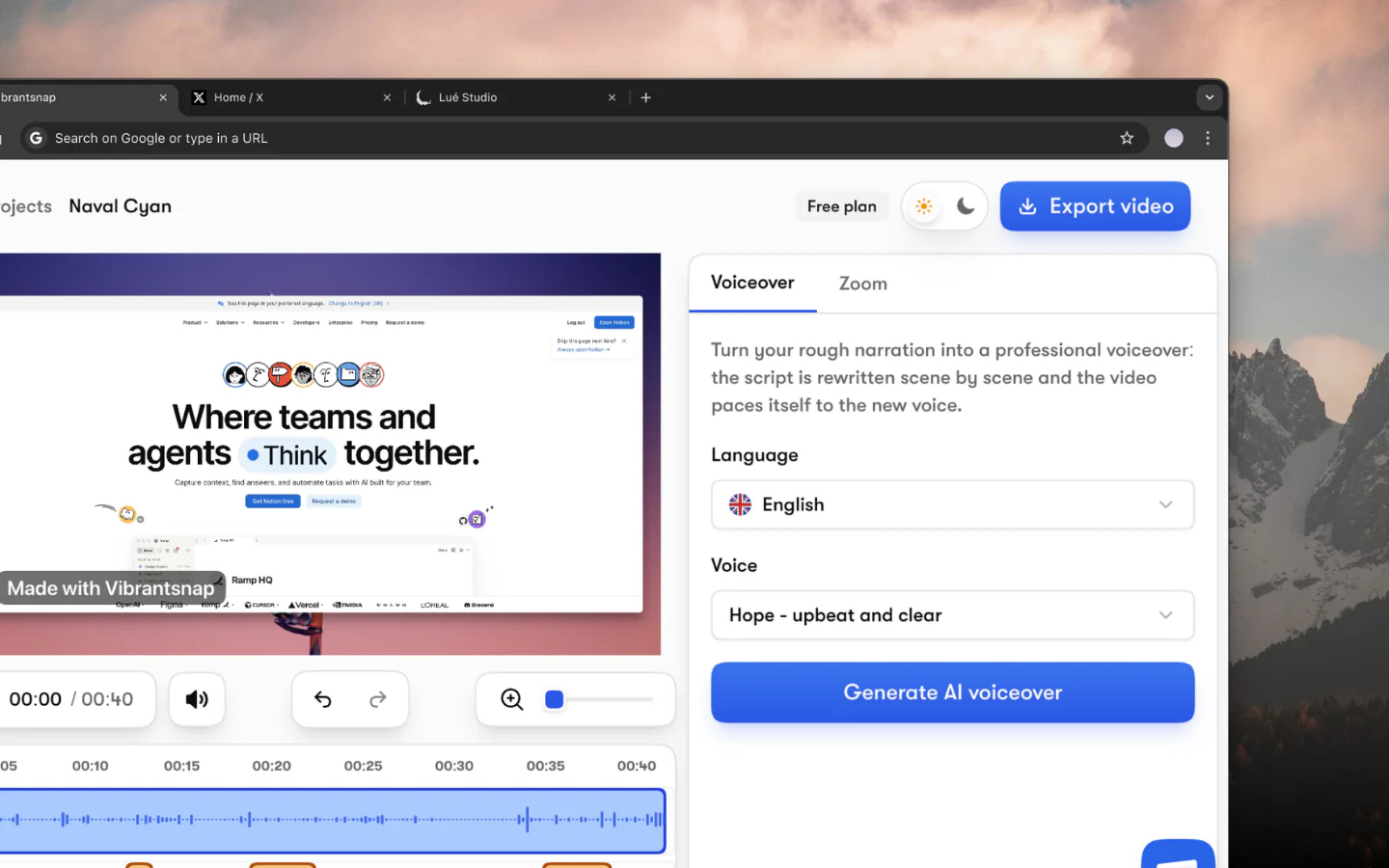
The problem I solved: As a developer building products, I spent hours editing demo videos. Cut the silences. Add zoom effects. Re-record when I made mistakes. It was painful.
What I built: Vibrantsnap automates all of that. Record your screen, and it automatically removes silences, adds zoom on clicks, and gives you analytics on viewer engagement.
What worked:
- Building something I personally needed
- Launching on Product Hunt (reached #1)
- Creating demos using my own product (meta, I know)
- Building in public on Twitter
What was hard:
- Finding the right pricing
- Competing with free alternatives
- Marketing as a developer, not a marketer
- Balancing building vs. selling
Where I am now: Growing, profitable, and still learning. The journey isn't linear.
Common Bootstrapped Startup Questions
"Should I have a co-founder?"
The data: Most successful bootstrapped startups have 1-2 founders. Very few have 3+.
Solo founder successes: Nomad List, ProjectionLab, Testimonial.to, 750 Words
Co-founder successes: Plausible, Tally, Balsamiq, Submagic
My take: Solo is harder but gives full control. Co-founders help with loneliness and complementary skills. Don't take a co-founder just to have one.
"How long until I can quit my job?"
The data varies wildly:
- SiteGPT: 1 month to $10K MRR
- Tally: 42 months to $100K MRR
- ProjectionLab: Quit at $200K ARR (~4 years)
- Plausible: 23 months to $10K MRR
The safe answer: When your MRR covers 12+ months of expenses and is growing. Most founders I studied quit somewhere between $50K-$200K ARR.
"What if a funded competitor enters my space?"
The honest answer: It happens. And often, they lose.
Ticket Tailor competes with Eventbrite (raised $1B+). They processed 19% of Eventbrite's global volume with 20 employees.
Plausible competes with Google Analytics (free, unlimited resources). They have $3.1M ARR.
Why bootstrapped companies survive:
- Speed and agility
- Customer obsession
- Profitability as default
- Long-term thinking
"Should I raise VC eventually?"
Some bootstrapped founders do:
- Gymdesk joined TinySeed (10% for mentorship)
- Podscan raised from Calm Company Fund (bootstrapper-friendly)
Most don't:
- Balsamiq rejected VC since 2008
- Nomad List runs solo, rejected offers
- Plausible stayed independent
Consider VC if:
- The opportunity requires speed you can't self-fund
- You want to go bigger than lifestyle business
- You find truly aligned investors
Stay bootstrapped if:
- Profitability matters more than growth
- You want full control
- You're building for decades, not an exit
Resources for Bootstrapped Founders
Communities
- Indie Hackers (free, best for starters)
- MicroConf (conferences + community)
- TinySeed (accelerator for bootstrapped)
- r/SaaS and r/startups (Reddit)
Podcasts
- Indie Hackers Podcast
- MicroConf On Air
- The Bootstrapped Founder (Arvid Kahl)
- Startups for the Rest of Us
Books
- "The Mom Test", Customer interviews
- "The Embedded Entrepreneur", Arvid Kahl
- "Company of One", Paul Jarvis
- "Start Small, Stay Small", Rob Walling
Conclusion: The Bootstrapped Advantage
Here's what the VC world doesn't want you to know: you don't need their money.
The 29 most profitable bootstrapped startups range from $6K to $883K in monthly revenue. All built without traditional funding. All profitable. All on their own terms.
What they have in common:
- Solved their own problem
- Niched down ruthlessly
- Built in public
- Prioritized profitability
- Thought in years, not quarters
You can build a million-dollar business without giving up control. It takes longer. It's harder in some ways, easier in others. But it's absolutely possible.
Start small. Ship fast. Stay profitable.
Building a product? You need demo videos that convert.
Try Vibrantsnap free , Record, auto-edit, and track your product demos. Built by a bootstrapped founder who got tired of spending hours editing videos.
Data in this article comes from public sources including Indie Hackers, GetLatka, founder interviews, and company blogs. Revenue figures are as of their most recent public disclosure.